PAC-3310 is a selective M4 muscarinic receptor agonist that attenuates MK-801-induced hyperlocomotion in mice
Abstract
The M4 muscarinic acetylcholine receptor regulates striatal signaling and is a target for antipsychotic drug development. Here, we characterize a new small molecule drug, PAC-3310, in functional assays spanning all five human muscarinic receptor subtypes, as well as a mouse model of MK-801-induced hyperlocomotion. PAC-3310 produced a significant agonist curve in M4-expressing CHO-K1 cells with nanomolar potency (cAMP EC50 = 97 nM, p = 9 × 10⁻⁸), while its EC50 at M1, M2, M3, and M5 was either not significant or exceeded 10 µM, indicating >100× selectivity for M4. Meanwhile, PAC-3310 did not produce a significant antagonist curve at any subtype. In mice, orally administered PAC-3310 significantly reduced MK-801-induced hyperlocomotion by 43.8% (p = 0.018) and 66.5% (p = 8.8 × 10⁻⁴) at dosages of 10 mg/kg and 30 mg/kg, respectively.
Background
Most currently available antipsychotic drugs act via dopamine D2 receptor blockade[1,2]. Although these drugs are effective in treating many positive symptoms of schizophrenia, the treatment response is often incomplete and is limited by metabolic, endocrine, and motor adverse effects[1,3,4]. Modulation of muscarinic acetylcholine receptors has long been hypothesized to be a promising, mechanistically distinct pharmacological strategy to mitigate the positive symptoms of schizophrenia[5,6], since cholinergic signaling - particularly signaling mediated by the M4 muscarinic receptor - has been shown to regulate dopamine-dependent circuits involved in psychosis[6–9]. For example, genetic deletion of M4 from D1 receptor-expressing neurons in mice increases locomotor activity and dopamine efflux from the nucleus accumbens, supporting an inhibitory role for M4 in striatal dopamine signaling[7]. Consistent with this mechanism, selective M4 activation reverses MK-801-induced hyperlocomotion and related behavioral deficits in wild-type but not M4-knockout mice[10]. These observations provide a rationale for developing M4 activators as non-D2 alternatives for neuropsychiatric indications.
Clinical validation for muscarinic modulation in schizophrenia first came from xanomeline, a non-selective muscarinic agonist.[11] Xanomeline was shown to ameliorate psychotic symptoms in patients with schizophrenia[11,12], though peripheral cholinergic side effects arising from the drug’s non-selective muscarinic agonism (particularly at M2 and M3) prevented the drug from reaching clinical utility. Later, xanomeline was combined with the peripheral muscarinic antagonist trospium, which reduced its cholinergic side effects[12]. The xanomeline + trospium combination passed larger schizophrenia trials[13–15] and was FDA-approved in September 2024.[16] Despite avoiding side effects associated with conventional D2 blockade and benefitting from the peripheral anticholinergic action of trospium, xanomeline + trospium still produces significant gastrointestinal and cardiac side effects[14,15,17], which has prevented wider adoption of the drug combination[18].
An alternative strategy to avoid cholinergic adverse effects is to selectively activate only M4 while sparing M2 and M3 which are primarily implicated in mediating adverse effects[6]. This strategy benefits from more directly targeting the dopamine dysregulation underlying schizophrenia and also provides a simpler, single-drug therapy without the anticholinergic burden of trospium.[8,12]
Here, we introduce and characterize PAC-3310, a novel selective M4 small molecule agonist, in functional assays spanning all five human muscarinic receptor subtypes. Agonist and antagonist activity was assessed using cAMP assays for M2 and M4 and calcium-flux assays for M1, M3, and M5. PAC-3310 exhibited agonist activity at M4 with nanomolar potency (EC50 = 97 nM) and >100× selectivity over the other four muscarinic receptors (EC50 > 10 µM for each). We subsequently evaluated PAC-3310 in the mouse MK-801 hyperlocomotion model and observed that it significantly reduced hyperlocomotion at oral dosages of 10 mg/kg and 30 mg/kg without any peripheral cholinergic side effects.
Materials and Methods
Cell culture and stable line generation
CHO-K1 cells were purchased from ATCC (CCL-61). Cells were cultured at 37°C and 5% CO2 and maintained in F-12K media supplemented with 10% FBS and 1× penicillin/streptomycin.
Expression plasmids encoding human M1, M2, M3, M4, and M5 muscarinic acetylcholine receptors in the pcDNA3.1(+) vector (cDNA Resource center) were sequence verified (Sanger sequencing, Elim Bio) and transfected into cells using Lipofectamine 3000 (Thermo Fisher). Stable lines were selected with G418 (1600 µg/mL) for 14 days and maintained at 500 µg/mL. Receptor overexpression in stable lines was confirmed by dose-dependent response to carbachol in functional signaling assays (cAMP for M2/M4 and calcium flux for M1/M3/M5; Fig. 1a,b).
Receptor signaling assays
M1-, M2-, M3-, M4-, and M5-expressing CHO-K1 cells were seeded in 96-well tissue-culture plates at 5 × 10⁴ cells/well in complete growth media without G418 24 hours prior to testing. Carbachol chloride (A2B Chem, AG24640) and PAC-3310 (custom synthesis) solutions were prepared by serial dilution into assay buffer (HBSS with 10 mM HEPES).
For cAMP measurements in M2- and M4-expressing cells, compound-containing buffer was supplemented with 500 µM IBMX and 30 µM forskolin to raise basal cAMP levels[19,20]. Cells were incubated with compound-containing buffer for 15 minutes at 37°C, then lysed with 0.1 M HCl. Intracellular cAMP levels in the lysate were quantified by ELISA (Cayman Chemical, 581002). Carbachol and PAC-3310 agonism were each evaluated as a seven-point full-log concentration series from 0.01 nM to 10 µM, with eight replicates per concentration. Antagonism was evaluated by combining the same PAC-3310 concentration series with empirical EC80 concentrations of carbachol (20 nM for M2; 100 nM for M4). Each plate included vehicle-only and carbachol-only controls.
For calcium flux measurements in M1-, M3-, and M5-expressing cells, cells were loaded with 3 µM Fluo-4 AM (Ion Biosciences) for 1 hour at 37°C in the presence of 2.5 mM probenecid and 500 µM Brilliant Black. Compound-containing buffer was added and fluorescence was read kinetically (5-second intervals over 5 minutes, ex/em 485/528 nm) on a BioTek Synergy HTX plate reader. Carbachol and PAC-3310 agonism were each evaluated as the same seven-point full-log concentration series as above, with four replicates per concentration. Antagonism was evaluated using empirical EC80 concentrations of carbachol (500 nM for M1/M5, 100 nM for M3). The normalized calcium response (ΔF/F0) was derived from a bi-exponential rise-decay curve fit to each trace[21].
Detailed assay protocols and curve-fitting procedures are provided in the Supplementary Methods.
Concentration-response analysis and statistics
All concentration-response data were fit using four-parameter logistic models, from which potency and maximal effect estimates were obtained (Supplementary Methods). Significance of concentration-response relationships was assessed by the extra sum-of-squares F-test versus a flat-line model. Behavioral outcomes were compared using Welch’s t-test against the MK-801 group unless otherwise indicated.
Animals and drug administration
All animal procedures were approved by the Charles River Laboratories Institutional Animal Care and Use Committee (Protocol #2025-2594) prior to testing. Male 12-week-old C57BL/6 mice (Charles River Laboratories) were housed in groups of 5 per individually-vented cage in a temperature and humidity-controlled vivarium on a 12-hour light/dark cycle, with ad libitum access to standard chow/water and two forms of enrichment. Animals were allowed to acclimate to the vivarium for 3 days after arrival, then were handled for an additional 3 days before behavioral testing to minimize stress.
Mice received PAC-3310 (1, 3, 10, or 30 mg/kg) or 0.5% methylcellulose vehicle by oral gavage 60 minutes before testing. The positive-control group received risperidone (A2B Chem, AB78825, 0.1 mg/kg, intraperitoneal). Mice then received MK-801 maleate (A2B Chem, AC51781, 0.15 mg/kg, intraperitoneal) or saline 5 minutes before testing.
Open-field hyperlocomotion test
Total distance traveled was assessed in open-field arenas constructed out of white acrylic (24 × 24 × 16 in). Mice were randomly assigned to treatment groups, and testing order was randomized across groups. No blinding was used. Each mouse was recorded for 30 minutes with an overhead camera. Each arena was cleaned between animals with 70% ethanol to minimize olfactory cues. Mouse position was tracked using DeepLabCut[22] using the pre-trained SuperAnimal TopView Mouse model[23]. Total distance traveled was computed from the mouse position and converted from pixels to centimeters based on manually specified arena coordinates for each video.
Results
Subtype-selective functional agonism of PAC-3310 at M4
To quantify the effects of PAC-3310 on all muscarinic receptor subtypes, we generated CHO-K1 cell lines stably overexpressing M1, M2, M3, M4, and M5 and validated them by measuring their functional responses to carbachol. In M2- and M4-expressing cells, carbachol reduced forskolin-stimulated cAMP levels with IC50 values of 10.5 and 23.6 nM, respectively (Fig. 1a). In M1-, M3-, and M5-expressing cells, carbachol increased calcium-flux ΔF/F0 with EC50 values of 568, 61.7, and 560 nM, respectively (Fig. 1b). All five concentration-response relationships were significant relative to a flat model (p ≤ 1.7 × 10⁻⁴).
We then tested PAC-3310 in agonist mode across all five subtypes (Fig. 1c). PAC-3310 produced a concentration-dependent reduction in cAMP in M4-expressing cells, with an EC50 of 97 nM (p = 9.0 × 10⁻⁸) and Emax of 92% of the maximal carbachol effect. In M2-expressing cells, PAC-3310 also produced a significant concentration response curve (p = 0.002), though with an estimated EC50 outside of the assay window (>10 µM). No significant concentration-response relationships were produced for M1 (p = 0.02), M3 (p = 0.01), or M5 (p = 0.44) through 10 µM.
In antagonist mode, PAC-3310 did not produce concentration-dependent inhibition at any receptor subtype (Fig. 1d). We did not observe significant concentration-response relationships for M2 (p = 0.763), M3 (p = 0.250), or M5 (p = 0.126). On the other hand, we observed significant concentration-response relationships for M1 (p = 1.7 × 10⁻³) and M4 (p = 2.9 × 10⁻⁴) but in the opposite direction as inhibition, suggesting possible additive agonism or positive modulation, though with modest effect sizes (19.5% and 29.6% increases in carbachol signaling at M1 and M4, respectively).
Together, these data demonstrate that PAC-3310 primarily behaves as a functional M4 agonist, with >100× selectivity over M1, M2, M3, and M5 and no measured antagonist activity at any muscarinic receptor.

PAC-3310 attenuates MK-801-induced hyperlocomotion in mice
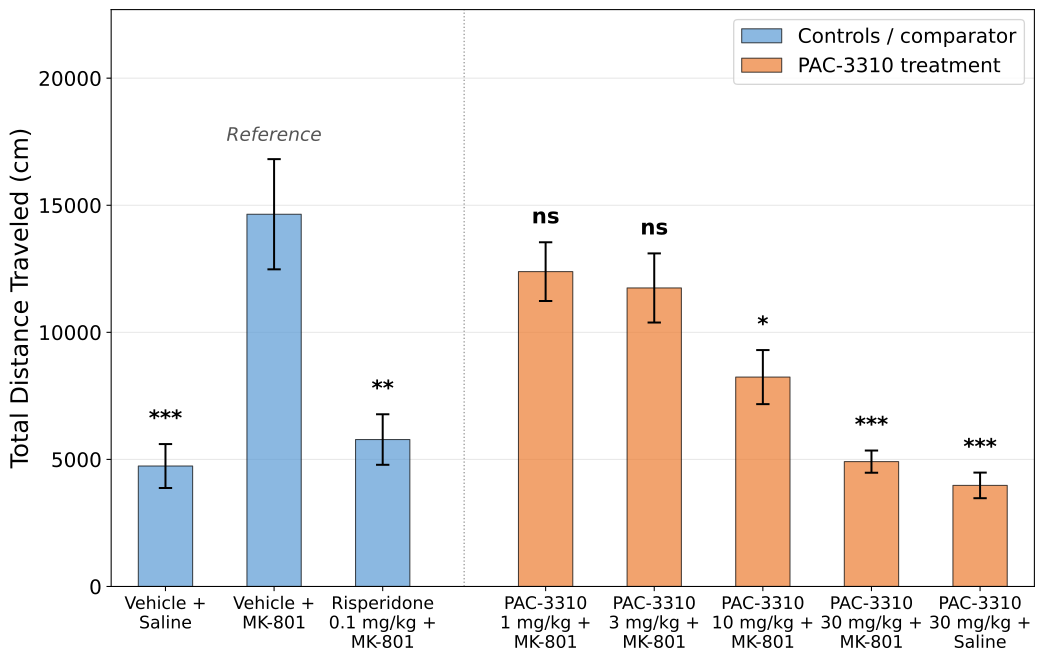
We next evaluated PAC-3310 in the MK-801 open-field hyperlocomotion assay. MK-801 (0.15 mg/kg, i.p.) increased total distance traveled in 30 minutes from 4,738 ± 864 cm (vehicle controls) to 14,646 ± 2,167 cm (p = 7.7 × 10⁻⁴; Fig. 2). Risperidone (0.1 mg/kg) reduced the MK-801 response to 5,781 ± 995 cm (p = 0.002 versus MK-801), serving as a positive control[24].
PAC-3310 similarly reduced MK-801-induced locomotion in a dose-dependent manner. The 1 and 3 mg/kg groups traveled 12,388 ± 1,155 and 11,745 ± 1,359 cm respectively, and were not significantly different from the MK-801 group (p = 0.37 and 0.27). On the other hand, the 10 mg/kg group traveled 8,238 ± 1,063 cm and the 30 mg/kg group traveled 4,912 ± 437 cm, corresponding to 43.8% and 66.5% decreases in locomotion (p = 0.017 and 8.8 × 10⁻⁴). In particular, the 30 mg/kg group was not significantly different from the vehicle group (p = 0.86), indicating that PAC-3310 fully counteracted the increase in locomotion due to MK-801 at this dose.
PAC-3310 at 30 mg/kg in saline-only mice traveled 3,976 ± 504 cm and did not differ from vehicle controls (p = 0.46). Thus, the PAC-3310 did not measurably suppress locomotion in the absence of MK-801, demonstrating that its effect was not mediated through nonspecific motor suppression.
Funding/Financial support
This work was supported by personal funds of the authors. No external funding was received for this research.
Acknowledgements
The authors would like to thank BioCurious for providing cell culture reagents, tissue culture room access, HPLC-UV access, and access to liquid handling robotics.
Conflict of interest
Douglas Y. is the founder of Pace Pharmaceuticals, which holds the patent for PAC-3310.
Data availability statement
OT-2 protocol code, raw plate reader data, per-well processed concentrations, and analysis code for all cell experiments are deposited at https://github.com/douglasyao/pac-3310-supplementary-data. Raw videos, tracked coordinates, and analysis code for all mouse experiments are deposited on Zenodo (https://zenodo.org/records/21939516).
Ethical statement
All animal procedures were approved by the Charles River Laboratories Institutional Animal Care and Use Committee (Protocol #2025-2594) prior to testing. No human subjects were involved in this study.
Supplementary material
References
- Kaar SJ, Natesan S, McCutcheon R, Howes OD. Antipsychotics: mechanisms underlying clinical response and side-effects and novel treatment approaches based on pathophysiology. Neuropharmacology. 2020;172:107704. PMID: 31299229.
- McCutcheon RA, Reis Marques T, Howes OD. Schizophrenia—an overview. JAMA Psychiatry. 2020;77(2):201–210. PMID: 31664453.
- Huhn M, Nikolakopoulou A, Schneider-Thoma J, et al. Comparative efficacy and tolerability of 32 oral antipsychotics for the acute treatment of adults with multi-episode schizophrenia: a systematic review and network meta-analysis. Lancet. 2019;394(10202):939–951. PMID: 31303314.
- Correll CU, Detraux J, De Lepeleire J, De Hert M. Effects of antipsychotics, antidepressants and mood stabilizers on risk for physical diseases in people with schizophrenia, depression and bipolar disorder. World Psychiatry. 2015;14(2):119–136. PMID: 26043321.
- Raedler TJ, Bymaster FP, Tandon R, Copolov D, Dean B. Towards a muscarinic hypothesis of schizophrenia. Molecular Psychiatry. 2007;12(3):232–246. PMID: 17146471.
- Foster DJ, Bryant ZK, Conn PJ. Targeting muscarinic receptors to treat schizophrenia. Behavioural Brain Research. 2021;405:113201. PMID: 33647377.
- Jeon J, Dencker D, Wörtwein G, et al. A subpopulation of neuronal M4 muscarinic acetylcholine receptors plays a critical role in modulating dopamine-dependent behaviors. J Neurosci. 2010;30(6):2396–2405. PMCID: PMC2824442.
- Nunes EJ, Addy NA, Conn PJ, Foster DJ. Targeting the actions of muscarinic receptors on dopamine systems: new strategies for treating neuropsychiatric disorders. Annual Review of Pharmacology and Toxicology. 2024;64:277–289. PMID: 37552895.
- Brady AE, Jones CK, Bridges TM, et al. Centrally active allosteric potentiators of the M4 muscarinic acetylcholine receptor reverse amphetamine-induced hyperlocomotor activity in rats. Journal of Pharmacology and Experimental Therapeutics. 2008;327(3):941–953. PMID: 18772318.
- Bubser M, Bridges TM, Dencker D, et al. Selective activation of M4 muscarinic acetylcholine receptors reverses MK-801-induced behavioral impairments and enhances associative learning in rodents. ACS Chem Neurosci. 2014;5(10):920–942. doi:10.1021/cn500128b.
- Shekhar A, Potter WZ, Lightfoot J, et al. Selective muscarinic receptor agonist xanomeline as a novel treatment approach for schizophrenia. American Journal of Psychiatry. 2008;165(8):1033–1039. PMID: 18593778.
- Breier A, Brannan SK, Paul SM, Miller AC. Evidence of trospium’s ability to mitigate cholinergic adverse events related to xanomeline: phase 1 study results. Psychopharmacology. 2023;240(5):1191–1198. PMID: 37036495.
- Brannan SK, Sawchak S, Miller AC, Lieberman JA, Paul SM, Breier A. Muscarinic cholinergic receptor agonist and peripheral antagonist for schizophrenia. New England Journal of Medicine. 2021;384(8):717–726. PMID: 33626254.
- Kaul I, Sawchak S, Correll CU, et al. Efficacy and safety of the muscarinic receptor agonist KarXT (xanomeline–trospium) in schizophrenia (EMERGENT-2) in the USA: results from a randomised, double-blind, placebo-controlled, flexible-dose phase 3 trial. Lancet. 2024;403(10422):160–170. PMID: 38104575.
- Kaul I, Sawchak S, Walling DP, et al. Efficacy and safety of xanomeline–trospium chloride in schizophrenia: a randomized clinical trial. JAMA Psychiatry. 2024;81(8):749–756. PMID: 38691387.
- U.S. Food and Drug Administration. FDA approves drug with new mechanism of action for treatment of schizophrenia. September 26, 2024. FDA announcement.
- U.S. Food and Drug Administration. COBENFY (xanomeline and trospium chloride) prescribing information. 2024. Prescribing information.
- Smith G. Bristol’s $14 billion neuroscience drug bet is an early letdown. Bloomberg. April 28, 2026. Article.
- Wang S, Hashemi T, Fried S, Clemmons AL, Hawes BE. Differential intracellular signaling of the GalR1 and GalR2 galanin receptor subtypes. Biochemistry. 1998;37(19):6711–6717. doi:10.1021/bi9728405.
- Zhang R, Xie X. Tools for GPCR drug discovery. Acta Pharmacologica Sinica. 2012;33(3):372–384. doi:10.1038/aps.2011.173.
- Hoare SRJ, Tewson PH, Quinn AM, Hughes TE, Bridge LJ. Analyzing kinetic signaling data for G-protein-coupled receptors. Scientific Reports. 2020;10(1):12263. doi:10.1038/s41598-020-67844-3.
- Mathis A, Mamidanna P, Cury KM, et al. DeepLabCut: markerless pose estimation of user-defined body parts with deep learning. Nature Neuroscience. 2018;21(9):1281–1289. doi:10.1038/s41593-018-0209-y.
- The DeepLabCut Model Zoo! — DeepLabCut. Documentation.
- Su YA, Si TM, Zhou DF, et al. Risperidone attenuates MK-801-induced hyperlocomotion in mice via the blockade of serotonin 5-HT2A/2C receptors. Eur J Pharmacol. 2007;564(1–3):123–130. doi:10.1016/j.ejphar.2007.02.031.